Cold Laser Therapy
Cold Laser Therapy
Cold Laser Therapy uses low-level laser light to calm pain and inflammation and support faster healing in soft tissue. Sessions are painless, drug-free, and typically last 10 to 20 minutes, making this an easy addition to a broader physical therapy plan for patients dealing with acute injuries, overuse strain, or lingering discomfort that hasn't responded well to other approaches.
What cold Laser Therapy is
Cold laser, also called low-level laser therapy, directs specific wavelengths of light into the skin and underlying tissue. Unlike surgical or high-powered lasers that cut or heat tissue, cold laser works at an intensity that does not generate noticeable heat or damage the skin. Instead, the light energy is absorbed by cells, where it is thought to influence cellular activity in ways that support the body's own repair processes and reduce the signals associated with pain and inflammation.
This approach developed as clinicians looked for non-invasive ways to address soft-tissue pain and slow-healing injuries without relying solely on medication or more invasive procedures. Because it does not involve incisions, needles, or systemic drugs, it is often used as a complement to hands-on physical therapy rather than a replacement for it, fitting into a larger rehabilitation plan alongside exercise, manual therapy, and other modalities.
How we use it at Physical Therapy and Rehabilitation Center of Brooklyn
At Physical Therapy and Rehabilitation Center of Brooklyn, Cold Laser Therapy is one of several on-site tools used to manage pain and support tissue healing. Sessions are short, painless, and drug-free, which allows the therapy to be worked into a visit without adding significant time or discomfort for the patient.
Cold laser sessions can be paired with other services offered at the practice, such as Pain Management, Sports Injury Rehabilitation, or Back Injury Rehabilitation, depending on what a patient's broader treatment plan calls for. For patients also being evaluated with the practice's on-site MRI & X-Ray, imaging results can help guide where and how cold laser is applied as part of a coordinated approach to soft-tissue and joint-related pain.
Because the practice treats a range of conditions — from post-surgical recovery to nerve pain and bone fracture rehabilitation — cold laser is typically considered when a patient's presentation involves inflammation or soft-tissue irritation that may benefit from a non-invasive, adjunctive approach alongside their primary therapy work.
What it means for you
For patients, one of the main appeals of Cold Laser Therapy is its simplicity. There is no needle, no incision, and no medication to manage, which makes it a comfortable option for people who are cautious about more invasive treatments or who want to limit their use of oral pain medication.
Sessions are brief, so they can often be added to an existing physical therapy appointment without requiring a separate visit. This can make it easier to stay consistent with a treatment plan, since patients are not asked to carve out significant additional time.
- Non-invasive — no needles, incisions, or systemic medication involved.
- Painless — most patients feel little to nothing during treatment.
- Quick — sessions generally run 10 to 20 minutes.
- Complementary — designed to work alongside other therapy, not replace it.
What to expect during your visit
Before a cold laser session, your therapist will typically identify the area of pain or inflammation to be treated, often based on findings from your evaluation or imaging. No special preparation is usually required — you do not need to fast, avoid medication, or arrange for recovery time afterward.
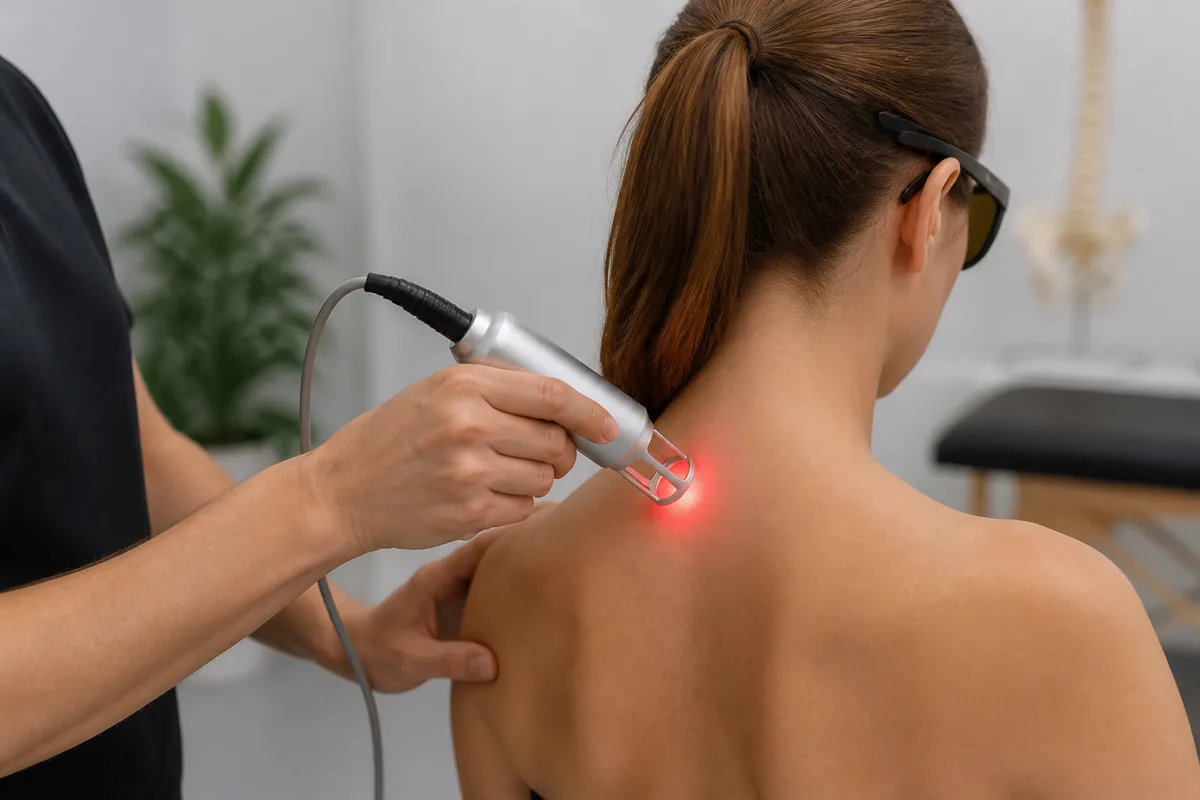
During the session, a handheld device is passed over or held against the skin in the treatment area. Most patients report feeling only a mild warmth or nothing at all; there is no burning, cutting, or discomfort associated with the light itself. The session itself generally lasts between 10 and 20 minutes.
Afterward, there is no downtime. Patients can typically resume their normal activities, including the rest of their physical therapy session, right away. Because cold laser is often used as part of a broader treatment plan, your therapist may recommend it be repeated over a series of visits rather than as a single, standalone treatment.
Is cold laser therapy safe?
Cold Laser Therapy is a low-level, non-invasive treatment that does not involve heat damage, incisions, or medication, which is part of why it is often chosen for patients who want to avoid more invasive options. As with any treatment, your therapist will review your specific situation to confirm it's an appropriate fit for you.
Does cold laser therapy hurt?
No. Most patients feel little to nothing during a session, and some notice only a mild sense of warmth where the device is applied. There is no cutting, burning, or lasting discomfort associated with the treatment itself.
How long does a session take, and how many will I need?
A typical session lasts 10 to 20 minutes. The number of sessions varies depending on the condition being treated and how it fits into your overall physical therapy plan, so your therapist will discuss a recommended schedule based on your specific needs.
Who is cold laser therapy suitable for?
Cold Laser Therapy is generally considered for patients dealing with soft-tissue pain, inflammation, or slow-healing injuries as part of a broader rehabilitation plan. It is often used alongside services such as Pain Management, Sports Injury Rehabilitation, or Back Injury Rehabilitation, and your therapist can help determine whether it makes sense for your particular situation.
If you'd like to learn whether Cold Laser Therapy could be part of your treatment plan, reach out to Physical Therapy and Rehabilitation Center of Brooklyn to ask about scheduling a visit.
This content is for general information only and isn't medical advice. Check with your provider or doctor before you start a new exercise or treatment. If you have a medical emergency, call 911.