DRX9000 Spinal Decompression
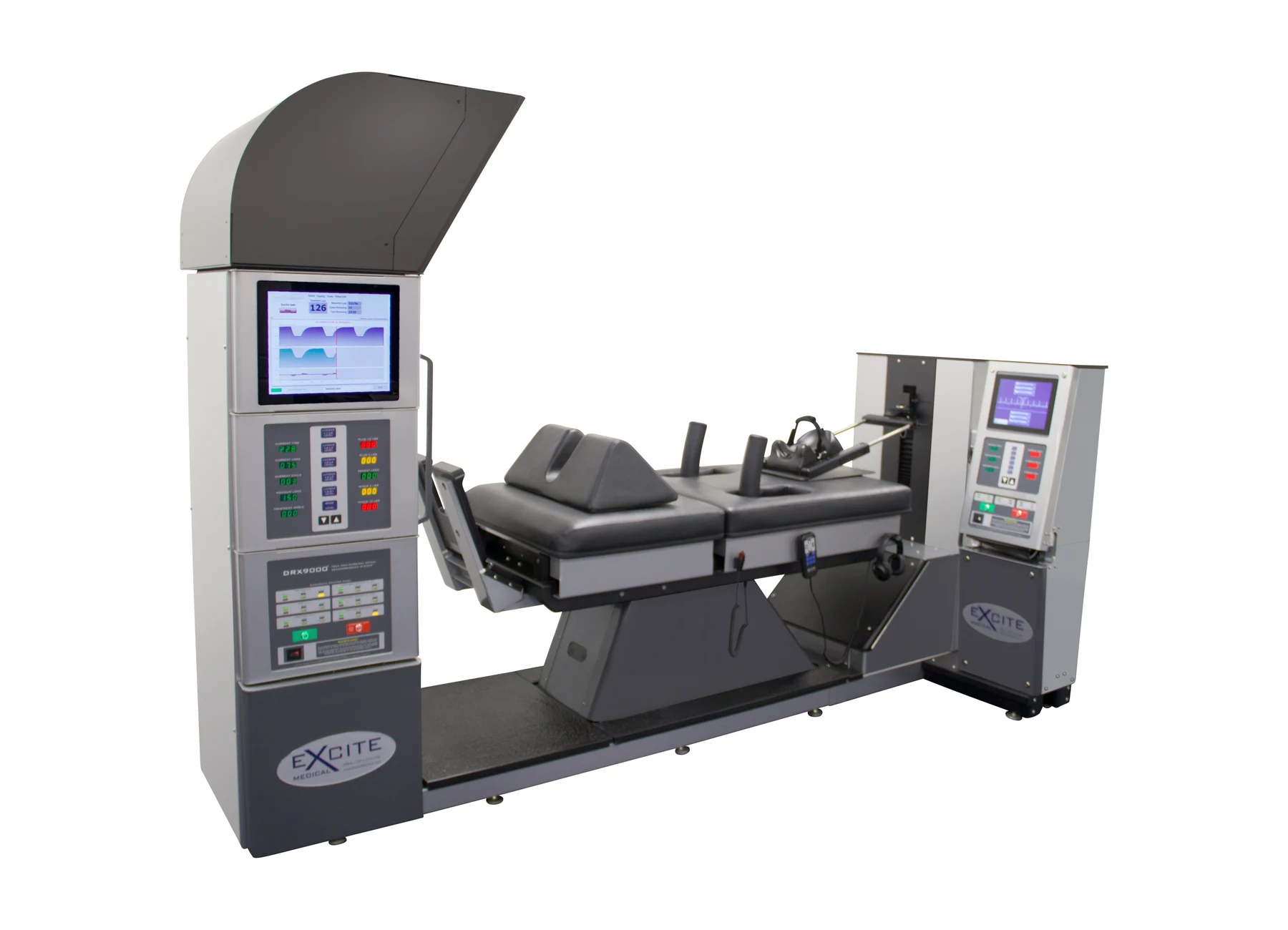
DRX9000 Spinal Decompression
The DRX9000 is a computer-controlled decompression system that gently stretches the spine to relieve pressure on herniated or bulging discs and pinched nerves. It offers a non-surgical option for people dealing with sciatica, spinal stenosis, or chronic back and neck pain that has not responded to rest, medication, or basic stretching.
What DRX9000 Spinal Decompression is
Spinal decompression works on a simple idea: by carefully separating the vertebrae, you create space that reduces pressure on discs and the nerves that pass near them. When a disc bulges or herniates, it can press on a nerve root and cause pain that radiates into the arms, legs, or hips. Gentle, sustained traction can pull the disc away from that nerve and encourage fluid and nutrients back into the disc space.
Traction itself is not new, but earlier versions were done manually or with simple mechanical tables that applied a fixed pull regardless of how a patient's body responded. The DRX9000 improves on that by using a computer to control the exact amount, angle, and timing of the stretch throughout each session, adjusting as needed rather than applying one constant force.
Because the system is programmed and monitored throughout the session, the stretch can be applied more precisely to the affected spinal segment, which is part of why this approach is often considered for patients who want to avoid or delay surgery.
How we use it at Physical Therapy and Rehabilitation Center of Brooklyn
At Physical Therapy and Rehabilitation Center of Brooklyn, the DRX9000 is used as part of a broader plan for back and neck pain, working alongside services such as Spinal Decompression, Back Injury Rehabilitation, Nerve Pain Rehabilitation, and Pain Management. For patients whose symptoms point to a disc problem, imaging from our on-site MRI & X-Ray can help confirm whether decompression is an appropriate part of the plan, with reports shared directly with the treating physician or therapist.
Decompression sessions are typically one part of a visit that may also include other pain-management or rehabilitation techniques, such as Cold Laser Therapy for inflammation, depending on what the treatment plan calls for. The goal is to address the mechanical pressure on the disc and nerve while also supporting the surrounding soft tissue and muscles that help keep the spine stable.
What it means for you
For patients, a computer-guided approach to decompression means the stretch applied to your spine is controlled and consistent rather than guesswork. Sessions are designed to be comfortable, and the gradual, programmed nature of the pull is meant to avoid the strain that can come with abrupt or uneven stretching.
- Non-surgical option — a way to address disc-related pain without an operation.
- Targeted approach — the system can be adjusted to the specific area of the spine involved.
- Coordinated care — when paired with imaging and other therapies on site, your treatment plan can be adjusted based on a fuller picture.
- Drug-free — decompression does not rely on medication to manage pain.
What to expect during your visit
Before your first decompression session, your therapist will review your symptoms, history, and any imaging to confirm that decompression is a good fit. You will typically lie on the DRX9000 table, and a harness system is positioned around your pelvis and lower ribcage or, for neck issues, around the head and shoulders.
During the session, the computer-controlled system applies a slow, gentle pulling force, alternating with brief periods of release, rather than one constant pull. Most people feel a mild stretching sensation rather than sharp pain; you should be able to communicate with the therapist throughout. A typical session lasts a set period within your appointment, and a course of care usually involves multiple visits over several weeks rather than a single treatment.
Afterward, you may be given additional exercises or other therapies to reinforce the effects of the session, and your response is monitored over time so the plan can be adjusted as needed.
Frequently asked questions
Is spinal decompression safe?
The DRX9000 is a computer-controlled system, which allows the force and angle of the stretch to be applied gradually and monitored throughout the session. Your therapist will review your history and any imaging beforehand to help determine whether decompression is appropriate for your situation.
Does it hurt?
Most patients describe the sensation as a gentle stretch rather than pain. The pull is applied gradually and can be adjusted, and you are able to communicate with your therapist during the session if anything feels uncomfortable.
How long does a session take, and how many will I need?
An individual session takes up a portion of your visit, and a full course of care generally involves multiple sessions spread across several weeks. The exact schedule depends on your specific condition and how your symptoms respond over time.
Who is a good candidate for this treatment?
People with sciatica, disc herniation or bulging, spinal stenosis, or chronic back and neck pain are often considered for spinal decompression. Imaging, such as the MRI or X-ray available on site, along with a review of your history, helps determine whether it is a suitable option for you.
If back or neck pain has been slowing you down, reach out to Physical Therapy and Rehabilitation Center of Brooklyn to ask whether DRX9000 Spinal Decompression could be part of your care plan.
This content is for general information only and isn't medical advice. Check with your provider or doctor before you start a new exercise or treatment. If you have a medical emergency, call 911.